
At a glance
Advanced tooling and composite components manufacturer, Pentaxia has transformed how it approaches the machining of complex components after introducing CNC metrology solutions from MSP. Initially adopted to support a specific project, MSP PerfectPart reduced production time for a set of parts by 50%, from 40 hours to 20 hours and eliminated a 100% concession rate. Beyond securing the contract, the technology has also enabled a cultural shift on Pentaxia’s shopfloor where complex projects no longer have the fear factor and issues can be dealt with proactively, instead of firefighting to meet deadlines. This has reduced shopfloor stress and created a more confident and controlled working environment. Pentaxia has also strengthened customer trust, resulting in repeat business and a more resilient long-term supplier partnership.
Concessions
Since introducing MSP, Pentaxia has successfully delivered 50 sets of parts without a single one requiring rework.
Reduction in Production Time
Production time for a set of parts has gone from 40 hours to 20 hours due to MSP PerfectPart.
Customer Relationships
MSP has helped Pentaxia win more repeat business and create resilient long-term supplier partnerships.
Products used




Background
Pentaxia provides a fully integrated, end-to-end production service, supporting customers from concept and tooling design to component production, surface coating and inspection. Its capabilities span from early-stage prototyping up to large-scale manufacturing, with projects varying significantly in complexity.
However, one project involving the machining of composite components threatened to push these capabilities to their limits. Faced with complex parts and tight timescales, Pentaxia found themselves with only two options: decline the contract or take a leap of faith. They chose the latter – a decision that would deliver benefits well beyond their initial expectations and transform the day-to-day reality of their shopfloor.
Pentaxia’s Lead Technical Engineer, Lucian Lazar, explains what they were facing:
“We were working with the customer during the early prototyping stage, but the turning point came when they requested a further 50 parts. We knew the timescales were unachievable with our existing processes and we would need a new machine and better kit to deliver on time. It was a risk but walking away wasn’t an option”.
Lucian Lazar, Pentaxia Lead Technical Engineer
Challenge
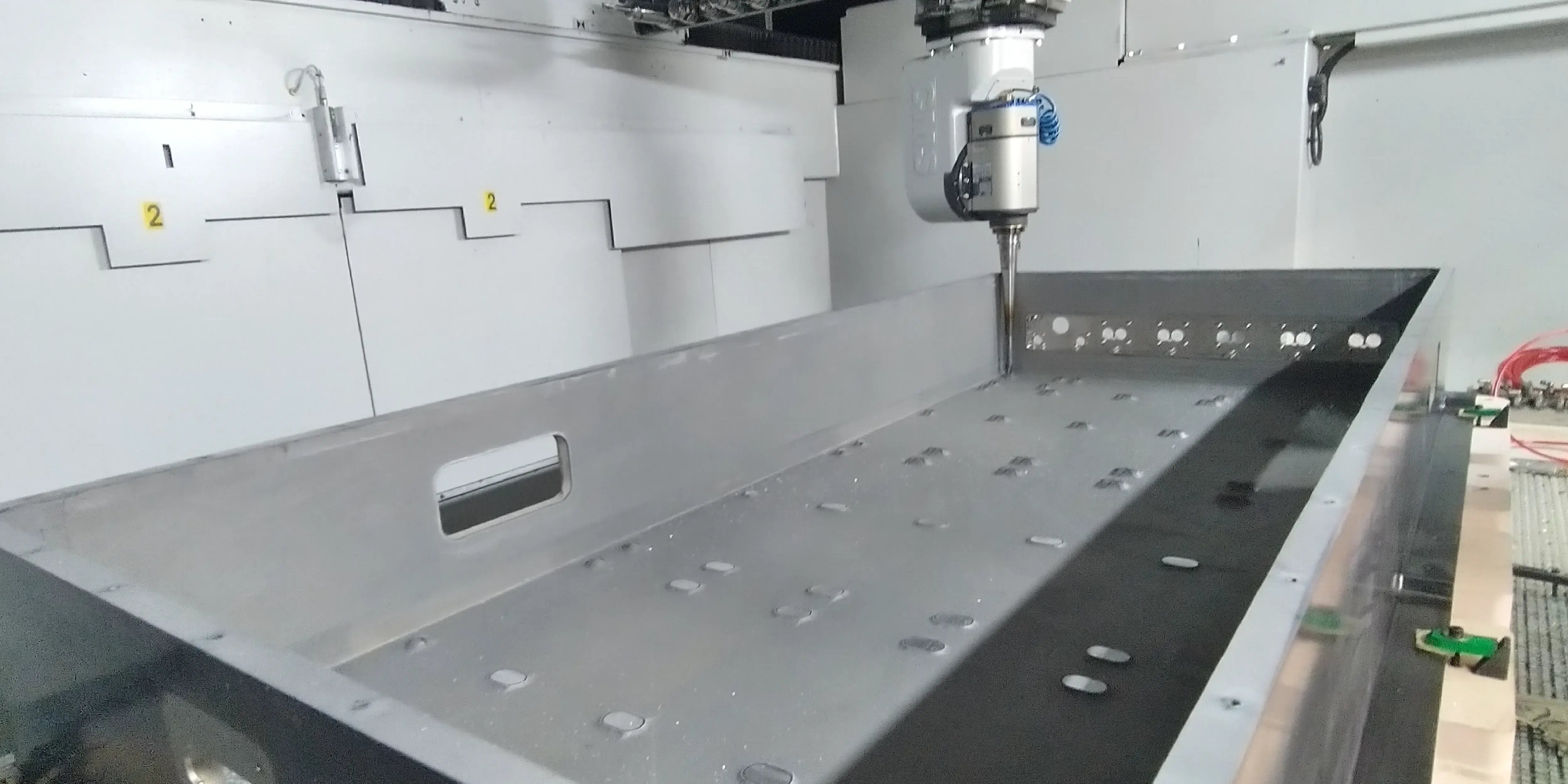
The difficulty lay in the shape and nature of the components Pentaxia were machining. Made up of different materials including composites, the parts were anything but flat and a challenge to machine accurately using traditional setup methods. Lucian explains: “Not only were they complex but the different materials were all fighting each other”.
Setting up each part was an extremely manual process, taking 2-3 shifts to set up a single part; with no guarantee the setup was correct. “For the production of a set of two parts, I’d estimate that it took approximately 40 hours, with two operations per part.”, says Lucian, “A lot of that time was spent decision-making, manually shimming and clocking features on the components and sending a spot drill to moulded-in holes.”
Even after spending this amount of time, the result was far from perfect. “We didn’t have a good way of checking our setup. Once we had the part fixtured as close as possible, we would carry out a double-check by spotting a few of the scribed features and assessing if the relative position of the holes was as close as possible to the scribed positions”.
Lucian continues:
“The main problem was that the process didn’t account for all six degrees of freedom. I don’t think there was a single part that was set up 100% correctly, each one had a concession raised against it.”
Lucian Lazar, Pentaxia Lead Technical Engineer
This time-consuming and inaccurate process meant production would not meet the target of making 4 sets a month.
Compounding the issue was the lack of knowledge regarding the performance of the CNC machine tool. “We were essentially machining blind”, explains Lucian, “The results at the end of the process were the only way of knowing what was going on. It was disheartening when a part came out as a non-conformance after so many man-hours, materials and resources had already been invested”.
This uncertainty was having an impact on the shopfloor. Lucian comments: “It was a stressful environment. These parts were worth tens of thousands of pounds, and even a minor error could be costly. None of the operators wanted to take part in this project because the pressure and risk were so high.”
Looking back on the process, Lucian says: “As we now know, our original approach would never have enabled us to successfully machine these parts to tolerance and on time, let alone create a stress-free environment. There needed to be a fundamental change to the process”.
Solution
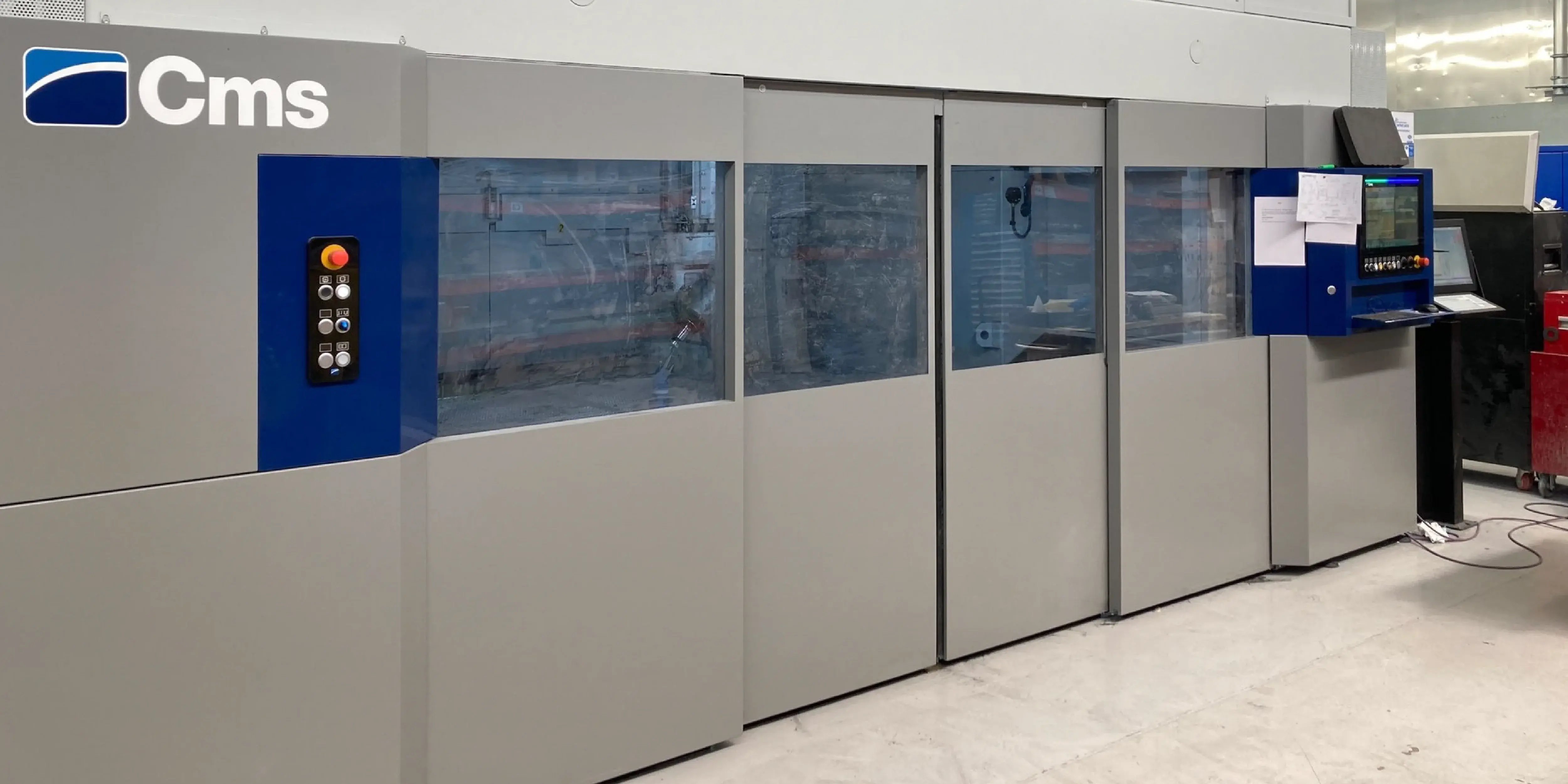
These changes started with the purchase of a new CMS machine and the introduction of MSP PerfectPart into Pentaxia’s CNC machining process. The MSP PerfectPart suite of CNC metrology products addresses problems at different stages throughout the machining process. From probe setup and machine checking to part setup and inspection, the products were put in place to reduce the uncertainty felt across the shopfloor, as Lucian explains: “MSP’s ability to minimise the unknowns throughout the whole process was a really important factor for us”.
The first step in that process is AutoClock which removes errors at the very start to ensure probe setup is accurate and reliable. AutoClock automatically calculates an accurate measurement for the position of the sphere, which the probe will then be calibrated from. This value is automatically uploaded to the work offset on the controller, removing the risk of manual error affecting the probe’s results throughout the rest of the process.
The next product in the suite, NC-Checker, has become critical for Pentaxia’s process. No part is machined unless the CNC machine has been assessed using NC-Checker, even if that means running the software multiple times a day. NC-Checker benchmarks the machine’s geometric performance to confirm whether it is capable of machining a part to within tolerance. The rotary and linear axis tests highlight any errors, allowing these issues to be addressed before machining begins, protecting parts from unnecessary risk.
Lucian explains how Pentaxia has used NC-Checker’s Benchmark reports to fine-tune machine performance beyond its usual parameters: “When we first implemented NC-Checker, the software showed potential mechanical improvements that hadn’t been picked up before. Even though the machine was still operating within the specified performance, I knew it needed to be better for this project. The Z-axis was taken apart and rebuilt, which improved its accuracy and overall machine performance and, ultimately, the accuracy of our finished parts”.
To address Pentaxia’s time-consuming part setup process and 100% concession rate, NC-PartLocator, the final product in the suite, was introduced.
NC-PartLocator removes the need to manually adjust the part or fixture on the machine tool bed by automatically generating an alignment in 6-degrees of freedom. The part is measured using 5-axis probing and NC-PartLocator uses the results to calculate the exact location of the part on the machine tool, compensating for any differences between the physical part and the nominal machining program. The updated alignment is automatically uploaded to the controller for a fast and error-free alignment process.
Lucian highlights the impact this has had on day-to-day machining decisions:
"The contrast between before and now is extraordinary. We had a part with 52 holes, and, because of the nature of the composite, the operators had to do a cut-measure-cut on every single hole. That’s potentially over 150 stressful decisions per part. Now, using NC-PartLocator, we can probe the part, generate the alignment in a single operation and start machining almost immediately."
Lucian Lazar, Pentaxia Lead Technical Engineer
He adds: “I like that we can do more than just Best Fit Alignments across the entire surface if we want to. We can check the components against actual features or understand the relationship between multiple features. This gives us a real picture of what’s actually going on”.
Result
Following the introduction of MSP’s products, production time per set of parts was reduced by 50%, from 40 hours to 20 hours. Pentaxia successfully delivered 50 sets without a single part requiring rework, reducing their original 100% concession rate to 0%.
Beyond these headline results, the information generated from the MSP PerfectPart suite has equipped Pentaxia with the intelligence to find and address real problems on the shopfloor, instead of firefighting to meet deadlines.
By using NC-Checker’s Benchmark Trends feature, Pentaxia noticed their machine performance drifting in and out of tolerance based on what was being machined. The data revealed that the repetitive machining of the composite parts was causing damage and the brakes were not re-engaging after the first hole had been drilled. Using NC-Checker’s insight, Pentaxia updated the post processor to engage the brakes after every hole, protecting the machine head from permanent damage from tool push off.
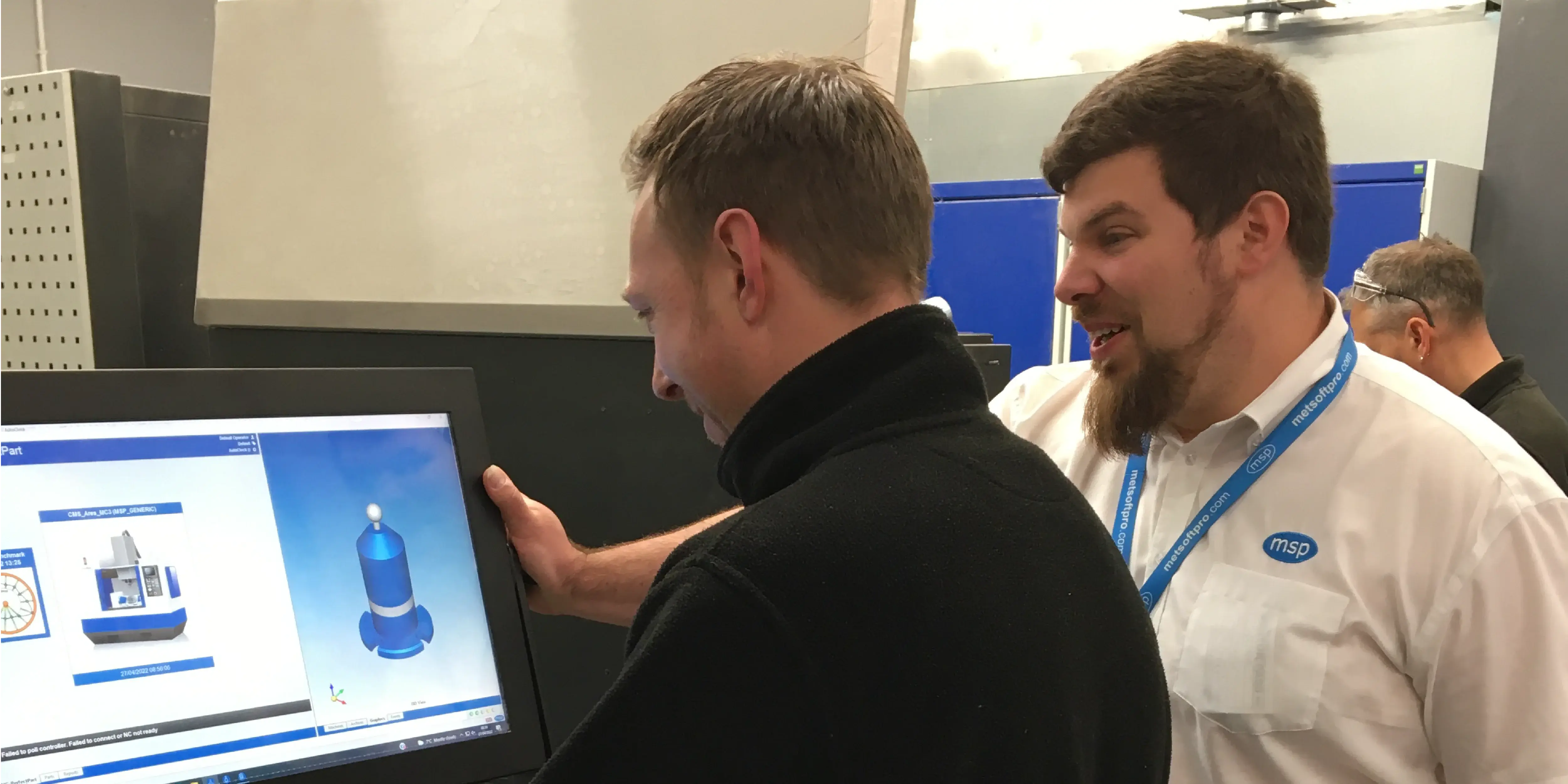
Lucian describes another example of how NC-PartLocator has informed their processes and changed what is possible: “When producing large or complex parts, we would mould in reference holes as it was impossible to manually locate the feature positions later. However, due to the thermal behaviour of tooling board and the lower accuracy of pattern-making machines, these reference holes were rarely accurate.
Instead, we came up with a solution using MSP’s technology. We manufactured the mould tool with no reference holes to remove any inaccuracies with the patterns. Once the part was machined, we then used NC-PartLocator to accurately locate the features, and this ensured they met the required tolerances when drilled. Before MSP, something like this would not have been possible”.
Whilst the technology was initially introduced as a ‘leap of faith’ to support a specific contract, its impact has extended far beyond the original requirement, influencing a broader machining strategy and fostering a more confident, controlled shopfloor culture.
Lucian says:
“All of the complex jobs go on the fondly named ‘MSP machine’ because that’s the safest place for them. The most complex parts now have the fewest errors - a total paradox to traditional manufacturing."
Lucian Lazar, Pentaxia Lead Technical Engineer
Because of this, the cultural shift across the shopfloor has been significant. Lucian comments: “A complex project no longer has the fear factor and is seen as a good challenge. The process is reliable and repeatable, and confidence across the shopfloor has soared”.
The ability to impress customers has also been an unexpected benefit.
“We worked on one part that required 75 hours of machining”, explains Lucian, “Our customer couldn’t believe the accuracy we delivered because there was such a high potential for something to go wrong. We now work hand in hand with our customers to ensure their parts will pass final inspection and this confidence has strengthened our relationships and helped us win repeat work”.
MSP’s introduction has not only strengthened Pentaxia’s position as a trusted supplier within the advanced manufacturing industry, but has given them the confidence, control, and intelligence to operate as a truly smart manufacturer.
Reflecting on this, Lucian remarks: “It has truly changed what’s possible across the shopfloor. We have moved from experience-driven and high-risk decision-making to intelligent, data-driven machining”.
“At the end of the day, it is the natural progression for CNC manufacturing. We used to machine parts by hand, then 5-axis CNC machines were created. This is the logical next step. People don’t need to be setting up parts by hand anymore when MSP can do it automatically”.
Lucian Lazar, Pentaxia Lead Technical Engineer

Be in a case study.
If you’ve had impressive results and want to be involved in your own case study, we want to hear from you! It’s a great way to shout about the collaboration between our great companies.